

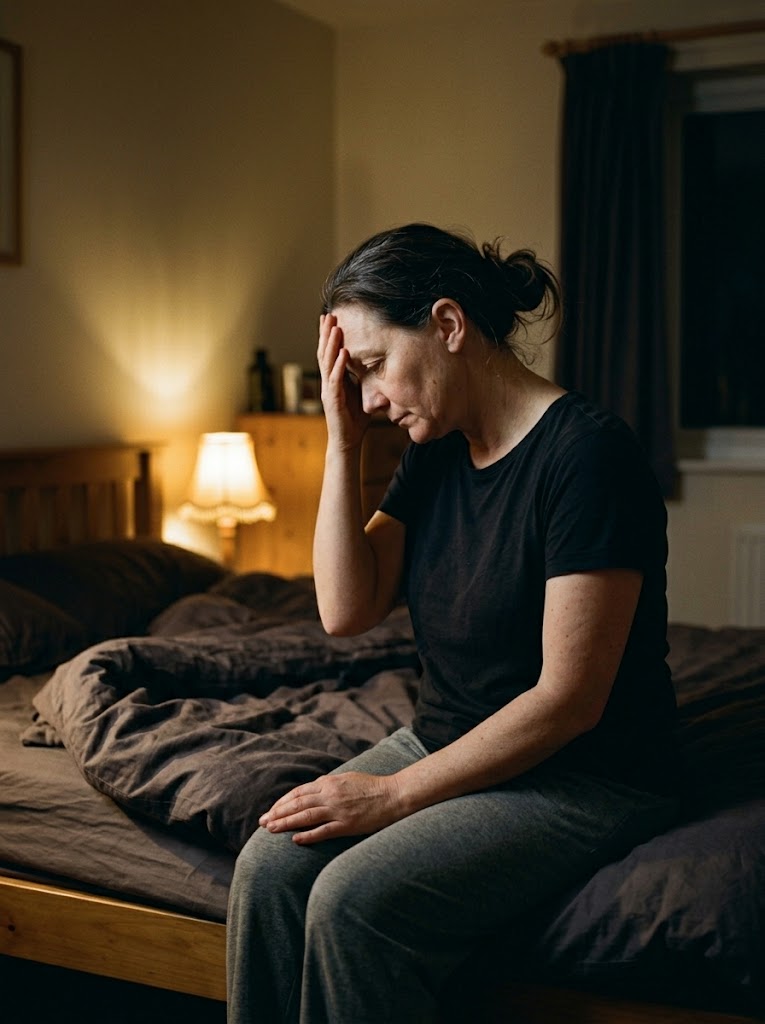
The HRT helped. So why does your brain still feel broken?
The hot flushes settled, but the brain fog, the lost words, the losing-the-thread mid-sentence never lifted. You’ve been told it’s “just menopause.” For some women, it’s ADHD, surfacing for the first time as oestrogen falls away.
Medically reviewed by Dr Asad Raffi, Consultant Psychiatrist · Last reviewed 25 October 2026
It arrived like a switch flipped in your forties.
Oestrogen was masking it. Now the mask is gone.
Oestrogen supports dopamine, the very system ADHD affects. For years it may have softened your symptoms enough to cope. As it falls in perimenopause, an ADHD that was always there can become much harder to compensate for. It isn’t new, and it isn’t decline. It’s being uncovered.
We look at the hormones and the ADHD, because they’re the same picture
Many services treat one or the other: an HRT clinic that doesn’t ask about attention, or an ADHD service that ignores your cycle. Our assessment for women looks at both together, plus your sleep, mood and body, so you finally get an answer that fits the whole of you.
Read: how ADHD shows up in women →Not sure if it’s menopause, ADHD or both? Take the free test
Two minutes, private, no commitment. It points you to the right next step.

Dr Asad Raffi
Consultant Psychiatrist, Medical Director and founder of Sanctum Healthcare
A Consultant Psychiatrist on the Specialist GMC Register with more than twenty years across the NHS and private practice, Dr Raffi has personally assessed thousands of adults and young people for ADHD and autism, and trained the clinicians who will assess you.
His particular expertise is in how these conditions present in women, and in the sleep, stress, hormonal and physical health problems that travel with them. Every diagnosis the clinic makes is reviewed and signed off by him.
The Menopausal Brain
A CBT-informed programme for ADHD and autistic women, in 12 modules
Perimenopause and menopause can turn a neurodivergent brain upside down. Written by our Medical Director, the programme explains why, and gives you practical tools to steady yourself again. It is workbook-based and works at your own pace, and you don’t need a formal diagnosis to use it.
Around one module a week, 30 to 60 minutes a lesson.
- 01What’s happening to my brain and body?
- 02Hormones and the neurodivergent brain
- 03Neurodivergence, masking and burnout
- 04Stress, trauma load and the nervous system
- 05Sleep, fatigue and cognitive stability
- 06Mood, dysregulation and rejection sensitivity
- 07Addictive and compulsive coping
- 08Thinking patterns under load
- + 4 more modules, from brain fog and memory to a long-term plan
What people say
Patients, in their own words, from our Google reviews.
I cannot thank Sanctum enough! The whole process was professionally carried out from my first enquiry to my diagnosis. The team were informative and guided myself and my partner in a sensitive and understanding manner throughout the whole process.
Audrey E.Within 1 hour 20 minutes with Dr Raffi, most of my problems were explained to me in a language I could understand, and made more sense than ever.
Lisa P.Sanctum healthcare have been exceptional in the service and care provided, they are professional, friendly, knowledgeable and most importantly understanding. They went above and beyond to ensure I felt heard, the diagnosis process was extremely thorough, and I was offered a clear treatment plan.
Becky A.Common questions
Sanctum Healthcare is CQC-registered
Sanctum Healthcare is CQC-registered. Our Wilmslow clinic is rated Good by the CQC. The Care Quality Commission is the independent regulator of health and social care in England, and it rated our Wilmslow clinic, 3 The Beeches, Good in October 2026. Our website is certified by LegitScript, which independently verifies healthcare providers.
Sanctum Healthcare on the CQC website · Our Wilmslow clinic’s CQC report · Verify our LegitScript certification
 Certified · verify for sanctumhealthcare.co.uk

